
Welding Fume Monitoring
Welding Fume Monitoring
Welding fume monitoring continues to grow in popularity with ongoing changes to legislation and many organizations wanting to better protect their workers. While the use of personal sampling pumps and filter cassettes to collect air samples for laboratory analysis is fairly common, real-time measurement instruments provide real-time alerts, data logging, reporting and other key benefits.
Many organizations want to measure background environments within their workshops where workers may be and often are at risk of exposure to welding fumes. While there are many different dust monitors, particle counters and other devices dressed up to be welding fumes monitors on the market, many of these are simply not fit for purpose for reasons of which will quickly become obvious.
With close to 40 years of experience with many different particulate measurement technologies, our staff at Alpha Scientific can help customers understand the science behind making these type of measurements properly.
Composition of Welding Fumes
Welding fumes are a mixture of metallic oxides, silicates, and fluorides. These fumes can also contain other components, such as nitrogen oxides and various other impurities depending on the materials being welded.
Updated IARC Classification
In March 2017, the International Agency for Research on Cancer (IARC) changed their classification from Group 2B (possibly carcinogenic to humans) to Group 1 (carcinogenic to humans). This update reflects a growing body of evidence linking exposure to welding fumes with an increased risk of cancer, particularly lung cancer & possibly other types of cancers.
Fume Formation & Particle Size
Fumes are produced when metals are heated to high temperatures, causing them to vaporize. These vapors then condense into fine particulate matter, typically ranging from 10nm to 1um in size. Particles below 100nm in size are known as ultra-fine particles.
Buying Equipment Fit For Purpose
Most of the particle, dust or fume monitors on the market are only capable of measuring down to 500nm or 300nm at best. Some more advanced instruments can measure down to or close to 100nm however it takes very specialized instruments to measure those potentially deadly ultra-fine particles below 100nm. Buying the wrong equipment leads to inaccurate measurements and a false sense of security.
-

Aeroqual AQM 65 BTEX Near Reference Particle Monitor
$0.00 -
Aeroqual AQM 65 Near Reference Particle Monitor
$0.00 -

Aeroqual AQS 1 Near Reference Air Quality Monitor
$0.00 -

Aeroqual Dust Sentry Near Reference Particle Monitor
$0.00 -

DusTech Surveyor Portable Real-time Dust Monitor
$0.00 -

DusTech XP Personal Real-Time Dust Monitor
$0.00 -

DusTech XPL DL5P Low Cost Fixed Particulate Monitor
$0.00 -
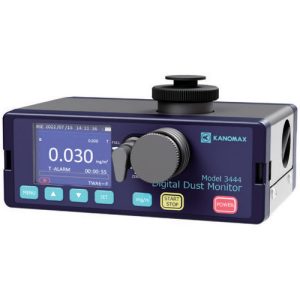
Kanomax 3444 Portable Real Time Dust Monitor
$0.00 -

NanoTracer XP Personal Ultrafine Particle Monitor
$0.00 -

Palas AQ Guard Advanced Portable Aerosol Monitor
$0.00 -

Palas AQ Guard Smart 1000 Advanced Dust Monitor
$0.00 -
Palas AQ Guard Smart 1000M Professional Dust Monitor
$0.00 -
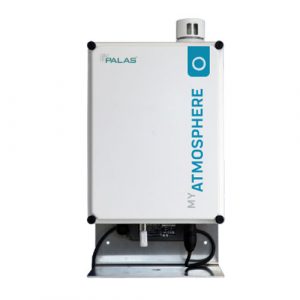
Palas AQ Guard Smart 2000 Ultra-Fine Particle Monitor
$0.00 -

Pegasor Airam Fixed Ultrafine Particle Monitor
$0.00 -
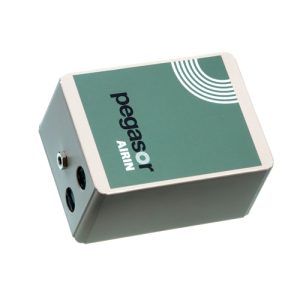
Pegasor Airin Fixed Ultrafine Particle Monitor
$0.00 -
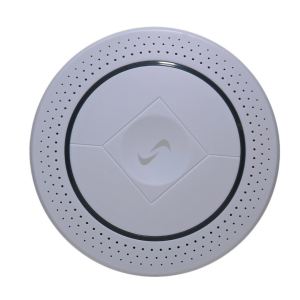
Synetica enLink IAQ Plus Multi-Function IAQ Sensor
$0.00 -
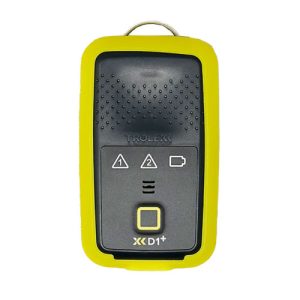
Trolex XD1+ Personal Real Time Dust Monitor
$0.00
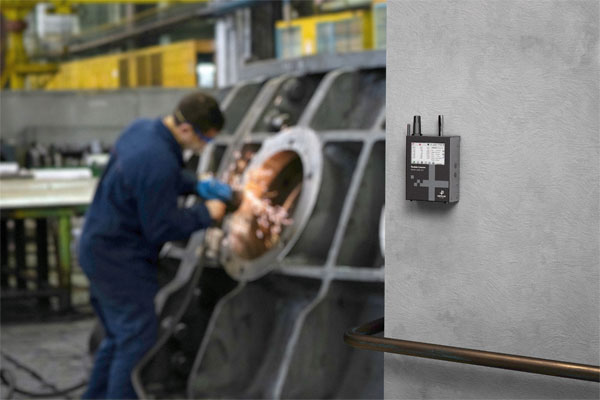

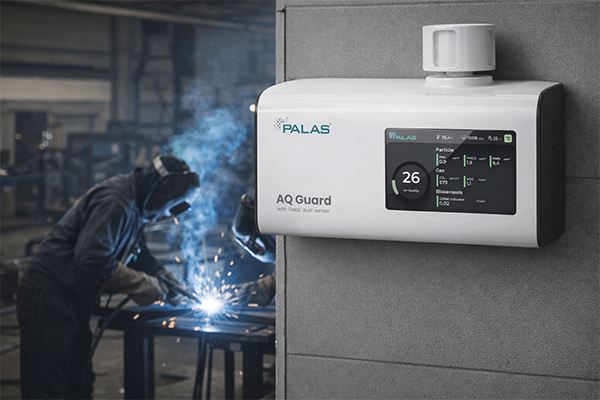
Welding Fume Monitoring
New Exposure Limits
In early 2024, the workplace exposure standard for welding fumes changed in Australia dropping from 5 mg/m3 to the new lower limit of 1 mg/m3 over an 8 hour time weighted average (TWA). This was a substantial drop in concentrations and many organizations may need to adapt to comply.
Human Life & Safety Is Paramount
What price do you put on human life? Protecting staff in the workplace should be priority one for employers. Without your staff, your business can’t operate. Exposure to carcinogenic welding fumes may not impact your staff immediately however it has the potential to seriously affect their health at some point in time.
WHO & Ultra-Fine Particle Exposure
The World Health Organization (WHO) and many other reputable global organizations have published articles relating to ultra-fine particle exposure on humans and the potential health impacts. The internet is full of articles, health studies and related material to this effect.
The Benefits of Real-Time Monitoring
You can’t hope to fix what you don’t know. The only way to properly monitor these environments is with a professional particulate monitor that is scientifically and technically capable of monitoring these type if particulates. With the right technology, you can monitor your workshops in real-time, log data, analyze trends, get real-time alerts and much more.
At Alpha Scientific, we understand the critical role air quality monitoring plays in safeguarding human health and enhancing workplace safety. Our welding fume monitoring instruments are engineered to deliver accurate, reliable data, empowering you to make informed decisions and create healthier, safer environments for all. Join us in our mission to breathe easier and weld smarter.
At Alpha Scientific, we offer a wide range of particle measurement technologies which may be used for welding fume monitoring and other air and particulate monitoring applications. Welding fume monitoring can help your organization protect your staff, ensure compliance with the latest exposure standards and much more.